
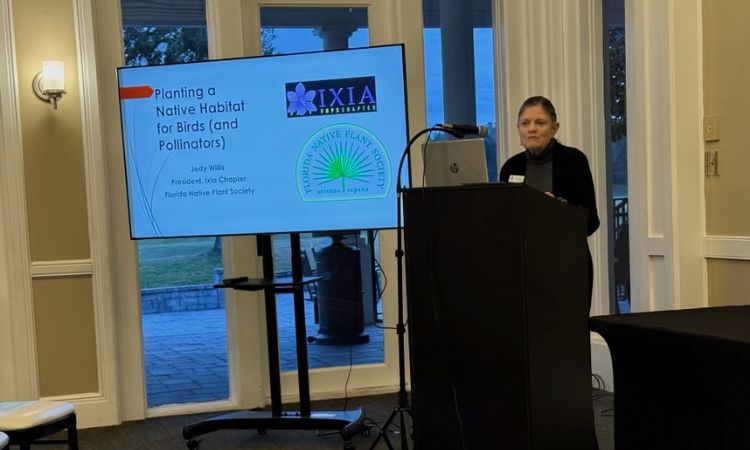
Deercreek Home & Garden Club members and other residents discovered the value of using native plants in their yards and landscaping during a presentation by Jody Willis, president of Ixia Chapter of the Florida Native Plant Society.
The “Sustainable Habitat and Native Plants” presentation, on January 14 at the Deercreek clubhouse, drew nearly 30 people in attendance.
Willis noted that bird populations in the U.S. and Canada have decreased by 29%—or nearly 3 billion—in the past 30 years; caused primarily by natural habitat loss. This results in the destruction of native plants which provide food, water and cover for birds and beneficial insects.
“Florida’s plants and animals have co-evolved over thousands of years resulting in a complex and wondrous web of interdependence,” Willis said. Native plants have the unique advantage of being well adapted to the Florida environment and do well without fertilizer or pesticides.
According to Willis, a third of the world’s food supply is dependent on birds, bees, and other insects as pollinators. Without native plants, our birds, bees and beneficial insects are in danger, she explained. In the U.S., native bees pollinate 75% of all plants—both cultivated and wild. Declining bee populations may ultimately affect our own food supply. Planting a natural habitat in the environment will offset the loss of bird populations as well as protect bees and beneficial insects who feed off the year-round supply of nectar, berries, fruit, seeds and nuts.
Willis offered homeowners several ways to create a more habitat friendly environment in our landscapes:
- Take an inventory of the plantings in your yard. Identify and remove invasive species or plants that are toxic to birds and insects.
- Limit pesticides, herbicides and spraying for mosquitoes—go organic if possible. Never use neonicotinoids such as Round Up, which are responsible for declining pollinator and insect populations.
- Incorporate native plants in your yard. Start small with one or two areas you’ve set aside for a butterfly garden.The speaker also offered suggestions on maintaining lawns that will result in less water. Leaves and grass clippings used as mulch will prevent water loss from the soil and provide habitat for beneficial insects. Ground covers and ferns can be used to replace some turf grass in yards.
The audience asked Willis a variety of questions about maintaining their own yards, getting rid of invasive plants and deer; and how they can create a more sustainable environment. She also gave resources on where to purchase native plants and offered wildflower seeds gathered by local members for purchase.
For more information and other resources related to creating native habitats, go to https://ixia.fnpschapters.org/