
“Bee the Change” – How We Can Impact our Environment
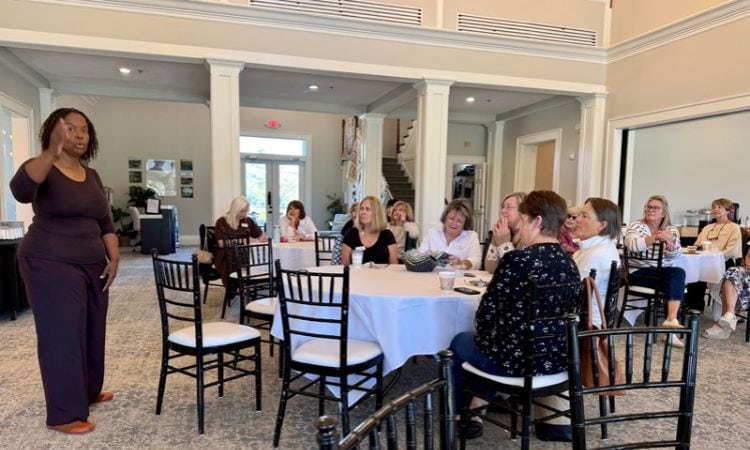
For October’s Home and Garden program, speaker Mika Hardison-Carr, founder of The Herban Bee, wowed attendees with her description of the lives of bees. She explained that there are honeybees and native bees. Honeybees live in hives with approximately 50,000 bees in them, while native bees are solitary and flit among flowers in your landscape.
She said honeybees live a structured existence within a hive. The queen bee lays eggs to create thousands of female worker bees who make honey to maintain the hive. In addition, there are male drones (2-3% in the hive) who mate with the queen. Beekeepers interact with this ecosystem by placing hives in fields with clover, strawberry patches or fruit trees, etc., and harvesting the honey once a year, usually in the summertime.
Bee hives are important since ‘1 in every 3’ bites of food we consume are impacted by bees. Bees are pollinators which connect female and male plants to form fruits. There are not enough bees across the United States to do this, so there are trucks loaded with hives that travel the country to support the blooming seasons of various fruits and fruit trees.
Mika emphasized that we are also part of this ecosystem. We impact bees’ health and honey production by the fertilizers and sprays we use in our gardens and landscapes. Bees support our entire way of life. “Bee the change – we are part of the food web and we must help sustain it.”
